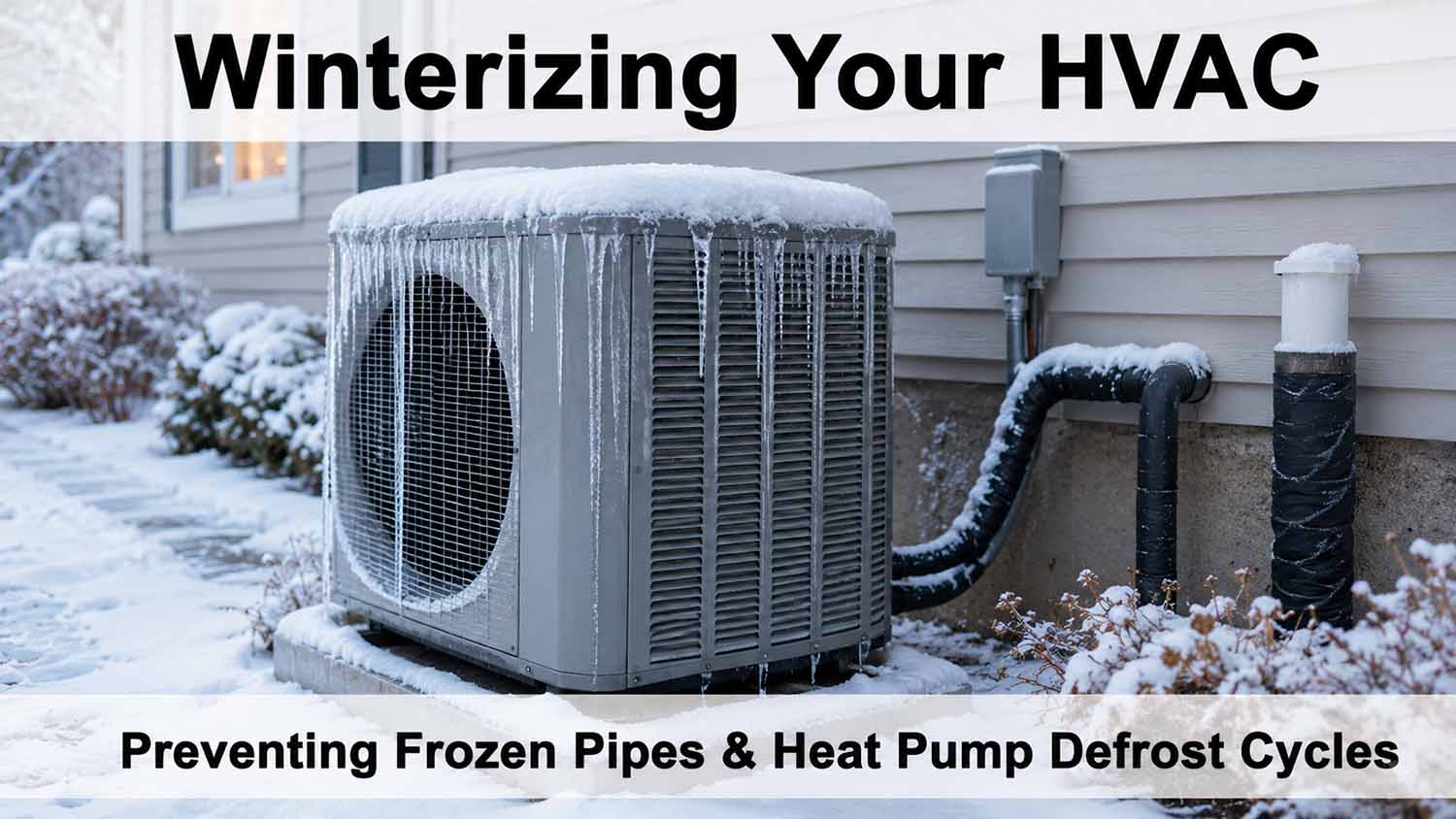
Winterizing Your HVAC: Preventing Frozen Pipes & Heat Pump Defrost Cycles
By: Milwaukie Heating & Cooling, Inc.
Published November 2025
As temperatures drop in November, preparing your HVAC system for winter is essential to avoid emergencies and potential damage. Homeowners often face common winter issues such as frozen pipes and inefficient heat pump defrost cycles. This article breaks down practical steps to winterize your system, covering heat pumps, gas furnaces, pipe insulation, and thermostat settings to help ensure year-round comfort and operational reliability.
Understanding Your HVAC Components
Before diving into winterization steps, it is important to understand how key HVAC components work and why they need extra care in cold weather.
- Heat Pumps and Defrost Cycles: A heat pump provides both heating and cooling by moving heat between indoors and outdoors. In freezing weather, moisture can accumulate on the outdoor coil, causing ice to build up. The defrost cycle is an automatic process where the system temporarily reverses to warm the coil and melt the ice.
- Gas Furnaces: These systems provide heat by burning natural gas to produce warmth. While typically robust, gas furnaces can be affected by cold snaps, especially if parts like gas valves or heat exchangers are not properly maintained.
- Frozen Pipes: Pipes in unheated areas such as basements, crawl spaces, or attics are at risk during freezing temperatures. Insulating these pipes can help maintain a steady temperature and prevent bursts.
Essential Winterization Steps
1. Inspect and Maintain Your Heat Pump
- Check the Defrost Cycle: Ensure your heat pump’s defrost cycle is functioning correctly. A properly working defrost cycle prevents ice buildup that can hinder system efficiency. If you notice persistent ice accumulation despite the defrost cycle operating, schedule a professional inspection.
- Clean Outdoor Coils: Dirt and debris on coils can impact the defrost cycle’s performance. A thorough cleaning improves defrost efficiency and helps prolong the life of the heat pump.
2. Prepare Your Gas Furnace
- Scheduled Maintenance: Have a qualified technician inspect your furnace before winter sets in. They can check critical parts such as burners, heat exchangers, and gas valves to help ensure safe and effective operation.
- Air Filter Replacement: Regularly replace or clean furnace filters. A clogged filter can reduce airflow and strain your system. You can purchase quality filters directly from Milwaukie Heating & Cooling at our shop for your existing furnace.
3. Insulate Exposed Pipes
- Pipe Insulation Techniques: Use foam pipe insulation or heat tape on pipes exposed to cold air, especially those running near exterior walls or in unheated spaces. This insulation helps maintain a stable temperature and prevents ice formation that can lead to pipe bursts.
- Seal Cracks and Gaps: Check for cracks or gaps where cold air may enter your home. Sealing these areas reduces the risk of frozen pipes and helps minimize heat loss overall.
4. Optimize Thermostat Settings
- Program Your Thermostat: Adjust thermostat settings to maintain a consistent indoor temperature during extreme cold spells. Modern programmable thermostats can automatically adjust settings during off-peak hours to balance comfort and energy efficiency.
- Smart Thermostat Benefits: If you have a smart thermostat, you can monitor and adjust your home’s temperature remotely. This device can also learn your schedule and optimize HVAC usage accordingly.
Preventive Measures: Why Proactive Care Matters
Cold snaps are unpredictable and can strike with little warning. A proactive approach to winterizing your HVAC system can prevent emergencies that may lead to costly repairs or dangerous situations. Regular maintenance checks and timely winterization help extend the life of your equipment and improve energy efficiency.
- Avoiding System Downtime: Ensuring your defrost cycle is in good working order means your heat pump is less likely to struggle during a cold snap.
- Preventing Damage: Frozen pipes can burst and cause extensive water damage. Insulating pipes and maintaining a consistent temperature helps reduce this risk.
Partnering with Professionals
At Milwaukie Heating & Cooling, we understand that not every homeowner is familiar with industry-specific terms or the technical details of HVAC systems. That is why we are committed to being your trusted partner in year-round HVAC reliability. Whether you need assistance with maintenance, repair, or guidance on winterizing your system, our experienced technicians are here to help.
For assistance, use our instant quote option or schedule an appointment. We also offer a variety of filters for your existing furnace to help support optimal performance during the coldest months.
By combining these strategies with regular professional maintenance, you can help ensure a comfortable winter season while extending the lifespan of your HVAC system. Trust Milwaukie Heating & Cooling to be your reliable partner in keeping your home warm and safe through the winter months.