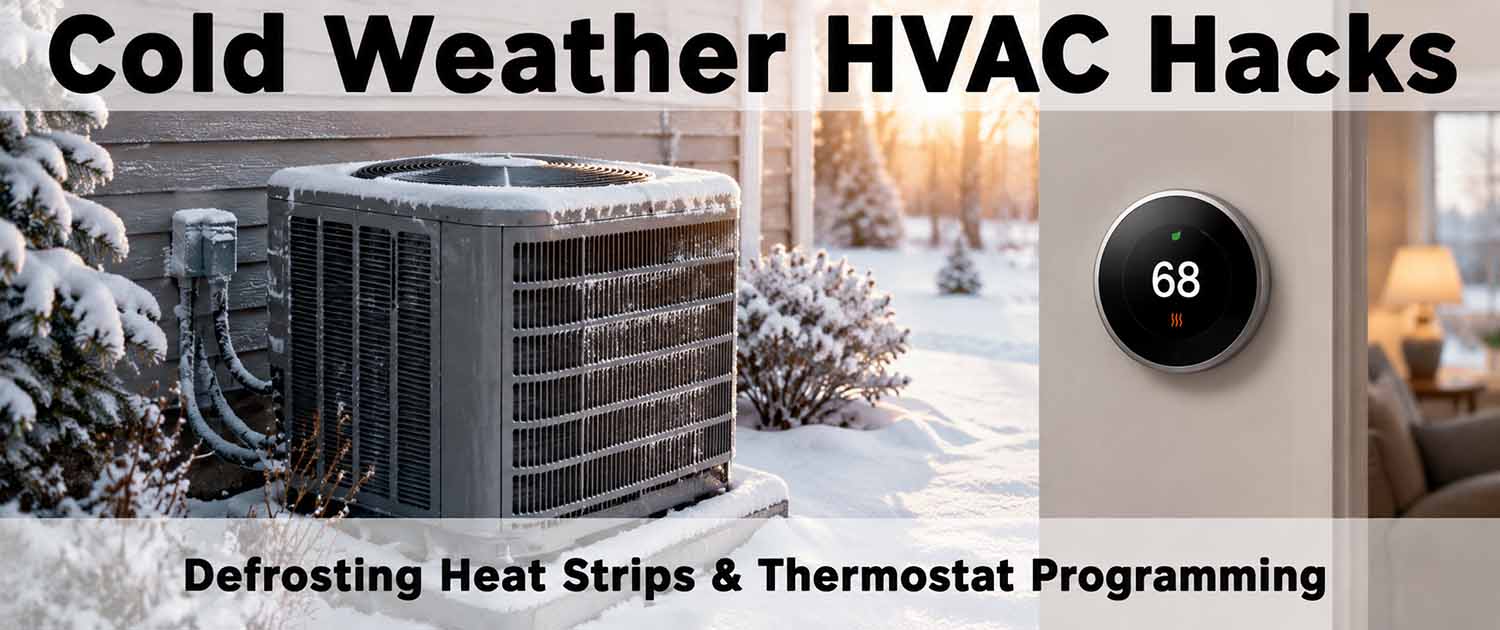
Cold Weather HVAC Hacks: Defrosting Heat Strips & Thermostat Programming
By: Milwaukie Heating & Cooling, Inc.
Published February 2026
As winter settles in and temperatures drop, homeowners face unique challenges in keeping their heating systems running efficiently. For those using heat pumps, cold conditions can lead to decreased performance if steps are not taken to manage defrost cycles and optimize thermostat settings.
In this article, we share practical tips and simple explanations for maintaining your HVAC system during cold weather while helping you improve comfort, efficiency, and system reliability.
Understanding Heat Pump Defrost Cycles
A heat pump works by extracting heat from the outside air, even when temperatures are below freezing. However, as it draws in cold air, moisture can accumulate on the outdoor coil and form frost. If not managed properly, this frost can limit efficiency and potentially damage the unit.
The Role of Defrost Settings and Heat Strips
- Defrost Cycle: This is an automatic process where the heat pump temporarily reverses operation to warm the outdoor coil enough to melt frost buildup. It helps prevent reduced efficiency and system strain.
- Heat Strips: Also called auxiliary or emergency heat, these supplemental electric heating elements activate during extremely cold periods or when the defrost cycle is active. They are useful, but excessive reliance on heat strips can increase energy usage.
Practical Tips for Managing Defrost Cycles
1. Schedule Regular Maintenance
Schedule routine inspections from a qualified HVAC technician to ensure that both the defrost cycle and heat strips are operating correctly. A well-maintained system can reduce energy waste and help prevent unexpected breakdowns.
2. Keep the Outdoor Unit Clear
Remove snow, ice, leaves, and debris around the outdoor unit. Clear space around the unit supports proper airflow and can reduce the frequency or duration of defrost cycles needed to melt accumulated frost.
3. Monitor Unusual Energy Spikes
If monthly energy bills suddenly increase during winter, your system may be using auxiliary heat more than necessary. In these cases, a professional assessment can help identify operational issues and optimize system performance.
Optimizing Your Thermostat Programming During Cold Weather
Programmable thermostats allow homeowners to tailor their heating schedule around daily routines and seasonal conditions. During colder months, smart thermostat programming can improve both efficiency and comfort.
Benefits of Programmable Thermostats
- Energy Savings: Reducing heat when you are away or sleeping can help lower energy bills.
- Consistent Comfort: Automated adjustments help prevent the home from becoming too cold during unexpected temperature drops.
- System Longevity: Optimized heating cycles can reduce strain on the HVAC system and support longer equipment life.
Programming Tips for Winter
1. Set Lower Base Temperatures
While it may be tempting to raise the heat significantly, setting a slightly lower base temperature, such as 68 degrees during active hours, can reduce the workload on your heat pump. Use programmable settings to increase temperatures shortly before you wake up or return home.
2. Use Smart Features
Many modern thermostats include features such as adaptive recovery, which learns your schedule and adjusts the heating cycle to reach the desired temperature efficiently.
3. Consider Zoning
If your HVAC system supports zoning, different areas of the home can be heated independently. Program each zone based on usage patterns to avoid overheating rooms that are rarely used.
4. Keep Thermostat Software Updated
Firmware updates for smart thermostats can improve functionality, control, and security. Keeping your device updated helps you benefit from the latest efficiency features.
Combining Both Approaches for Maximum Efficiency
When combined, proper defrost cycle management and efficient thermostat programming can noticeably improve system performance. Important benefits include:
- Balanced Operation: Proper defrost management minimizes unnecessary activation of heat strips and can reduce winter energy spikes.
- Customized Comfort: Thermostat programming helps keep your home comfortable without overburdening the heat pump during cold periods.
- Preventative Care: Regular maintenance and updates keep your HVAC system and thermostat operating at peak performance.
By understanding these parts of your HVAC system and making informed adjustments, you can help your heat pump operate more efficiently throughout winter. This also makes it easier to recognize early signs of inefficiency before they become larger problems.
When to Reach Out for Expert Assistance
If you experience persistent issues such as irregular defrost cycles, unusually high energy use, or thermostat accuracy problems, contact a professional. Milwaukie Heating & Cooling has the expertise to help diagnose and correct HVAC system complications.
For a hassle-free experience, take advantage of our: